Archiv rubriky: Nezařazené

Webinar 7. 12. : Open education over the pond? Updates from the OpenEd Conference, Vancouver 2015

The next webinar in the series promoted by the ALT Open Education Special Interest Group will take place on Mon 7 Dec from 12.30 to 13.15. This is a pre-conference webinar taking place in the week of the ALT online Winter Conference. The webinar title is:

Open education over the pond? Updates from the OpenEd Conference, Vancouver 2015

The free webinar will focus on teaching practices, research and policy from the perspective of US, Canadian and international communities, and will be presented by Dr Viv Rolfe from the University of the West of England and David Kernohan from Followersoftheapocalyp.se.

Details of the webinar and how to access it are at https://www.alt.ac.uk/civicrm/event/info?reset=1&id=199
Apologies for any inconvenience caused by cross-posting.
Terry Loane
Secretary, ALT Open Education SIG
Sent from my BlackBerry® wireless device

Securing user rights in education – reflections from our policy debate

by Alek Tarkowski from http://oerpolicy.eu/securing-user-rights-in-education-reflections-from-our-policy-debate/

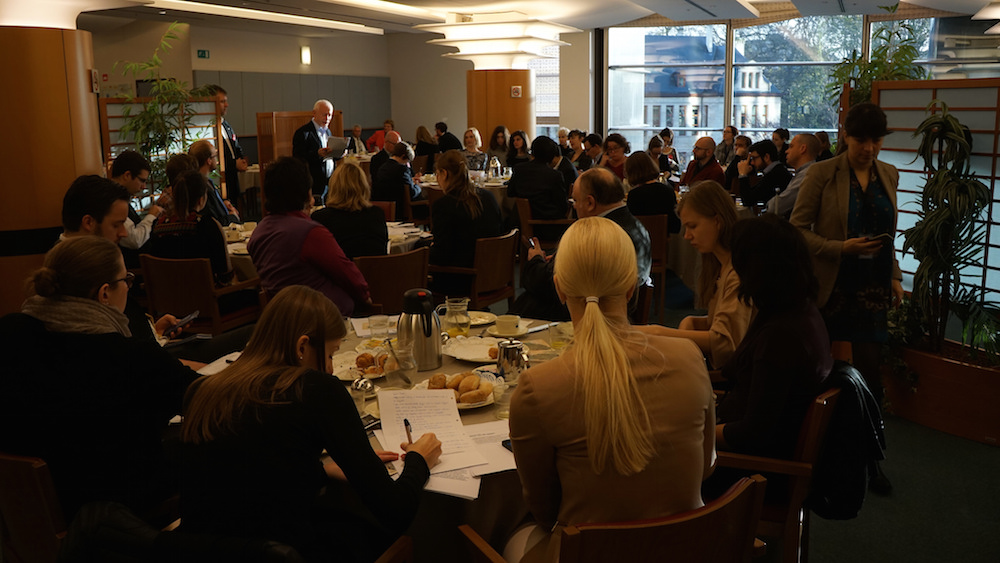
How to secure user rights in education? This was the question we asked during a policy debate organised by Communia and hosted by MEP Michał Boni in the European Parliament on the 17th of November. Panelists, politicians and stakeholders participating in this debate discussed two approaches: the creation and use of Open Educational Resources (OER), and a progressive copyright reform for education.

While these issues are usually presented separately, as Communia we see them as two aspects of a single effort to ensure user rights in education. This two-path approach has been acknowledged at least since 2013, when the Creative Commons community argued that the movement behind open licensing policies needs to be involved in the copyright reform debate as well. Today in Europe, we are facing both developments related to OER policies (related to the Opening Up Education initiative, launched in 2013), and a copyright reform process in which education has been highlighted by the EC to be one of key areas for modernisation of copyright.
22861930377_a58fda9bfd_k

Throughout the meeting, policies supporting OER and copyright law reform were presented as two solutions that are complementary, not mutually exclusive. This issue was highlighted by Michał Boni in his introductory speech, which highlighted the innovative potential for OERs—but also spoke about the need of securing a strong, harmonised copyright exception for educational uses. Boni also discussed the need for an approach that balances the varied interests of stakeholders in the educational sphere, including right holders and users.

Dr. Dominic Orr, consultant with OECD, presented insights from a new report titled „Open Educational Resources: a Catalyst for Innovation” (of which he is a co-author). The report goes beyond highlighting the importance of OER for ensuring educational equity, and stresses the innovative potential of resources that can be easily reused and repurposed.

Josie Fraser, a social and educational technologist working for the Leicester City Council, talked about ties between open education, digital literacy, and teacher training. She explained her experiences with introducing a city-wide policy that permits teachers to release their educational resources as OERs. Fraser also mentioned that copyright reform—especially the simplification of legal provisions so they’re easy to understand—could go a long way in empowering and encourage teachers to create OERs.

Teresa Nobre, representing Creative Commons Portugal and Communia, spoke about the importance of a harmonised approach to copyright exceptions for education. Her research on the current state of these exceptions demonstrates a fragmented and insufficient support for educators and learners across Europe.

Alek Tarkowski, who moderated the meeting on behalf of Centrum Cyfrowe and Communia, stressed that this discussion needs to take into account not just a balanced copyright system, but also the needs of educators and learners. In the sphere of education, copyright policy should reflect educational strategies, and support high quality, innovative, personalised education across Europe. This perspective was further underlined by participants in the debate, including representatives of Schoolnet, Education International, DG Education and Culture, and University of Zagreb. They spoke about needs of teachers— in particular the need for legal certainty when creating, using and publishing educational content. From this perspective, copyright awareness becomes a fundamental aspect of digital literacy and professional development for teachers.

Marco Giorello from the Copyright Unit at DG Connect placed the debate in the context of the Digital Single Market strategy of the European Commission, which brings in crucial issues having to do with enabling cross-border uses and the market effects of educational exceptions to copyright. With these considerations in mind, the EC will attempt to balance educational goals that can be achieved through reform of the educational exception.

As Communia, we will continue to participate in the policy debate on copyright in education. We believe that European Union should continue to develop policies and tools supporting Open Educational Resources, in line with its “Opening Up Education” initiative. Furthermore, we need to use the opportunity of the ongoing copyright reform to establish a strong and clear exception for education. As proposed by Teresa Nobre during our meeting, we need a single, broad and harmonised educational exception, defined by educational activity—not the type of institution. Furthermore, the exception needs to allow commercial as well as noncommercial use, and include an open norm to ensure its flexibility into the future.

(For further opinions about the event, please read posts by Sandra Kucina Softic from University of Zagreb and Christer Gundersen from NDLA).

(This post has been cross-posted on the blog of the Communia Association).
UNESCO improves the policy environment for OER

On Wednesday this week, the UNESCO General Congress adopted the Education 2030 Framework for Action.  This is particularly exciting for the Open Education community, as this framework calls for OER to be part of the agreed-upon action items to ensure equal access to affordable, high-quality education.

The Framework is in support of the Sustainable Development Goal #4, Ensure inclusive and quality education for all and promote lifelong learning  The Sustainable Development Goals were approved by the UN General Assembly in September this year.

The sections of the Education 2030 Framework that cite OER are:

Target 4.3: By 2030, ensure equal access for all women and men to affordable and quality technical, vocational and tertiary education, including university.

Point 43. A well-established, properly regulated tertiary education system supported by technology, open educational resources and distance education can increase access, equity, quality and relevance, and can narrow the gap between what is taught at tertiary education institutions, including universities, and what economies and societies demand. The provision of tertiary education should be made progressively free, in line with existing international agreements.

The Education 2030 Framework for Action can be downloaded here: http://www.unesco.org/new/fileadmin/MULTIMEDIA/HQ/ED/ED_new/pdf/FFA-ENG-27Oct15.pdf

You can see the Open Education Consortium’s blog post on this here: http://www.oeconsortium.org/2015/11/education-2030-includes-oer/

Kudos to UNESCO and to everyone who worked on the Framework, its discussions and action plans!  

—-

Mary Lou Forward

Executive Director | Open Education Consortium

tel +1 802.347.1373 | mobile +1 603.369.8113

www.openedconsortium.org

GEG hledá nové organizátory

Hledáme nové organizátory pro nové GEG skupiny

Google EDU Group je komunita učitelů, tvořená sítí místních skupin. 
GEG skupiny pořádají pro učitele z okolí komunitní akce (bezplatné workshopy, semináře, setkání, výlety…), na kterých si vyměňují zkušenosti s internetem a technologiemi ve výuce, učí se navzájem to, co už sami objevili, navazují nové kontakty s podobně naladěnými kolegy, pomáhají si a podporují se. Pro učitele je to zároveň i zábava a odpočinek, příležitost nabít se novou energií pro práci (nejen) ve škole.

Hledáme nové organizátory pro nové GEG skupiny!
V prosinci se sejdeme na startovacím setkání v Google v Praze!

Jak takový organizátor vypadá? 

  • zajímá se o technologie a jejich využití ve škole a navíc ho to baví
  • nemusí to ale být expert přes technologie
  • myslí si, že zkušenost, kterou předá kolega učitel, je k nezaplacení
  • rád by organizoval setkávání učitelů podobného ladění
  • nebojí se jít do neznámého, rád zkouší nové věci

Pro komunitní organizátory se jedná o časově nenáročnou dobrovolnickou práci, jejímž benefitemje pro ně zejména:

  • možnost stát se určitým centrem dění v rámci učitelské veřejnosti v jejich městě či regionu
  • příležitost potkat spoustu zajímavých lidí a naučit se hodně nového
  • napojení na ostatní organizátory GEG skupin v dalších regionech
  • účast na interních akcích v rámci GEG, které slouží k vzájemné podpoře i čistě k odpočinku
  • zapojení do celosvětové sítě dalších organizátorů Google EDU Groups
  • bližší kontakt s Googlem, jako naším hlavním partnerem

Organizátoři na to nejsou sami! Podporujeme je: 

  • metodicky – sdílením a zaučením v tom, co všechno se dá v komunitě dělat a jakým způsobem, zkušenostmi ostatních organizátorů, pomůžeme u prvních akcí s jejich organizací
  • obsahově – pomůžeme s obsahem setkání
  • propagačně – informace o komunitních setkáních šíříme našimi kanály a také prostřednictvím našich partnerů
  • materiálně – ve vybraných případech pomáháme i s finanční podporou na konkrétní komunitní setkání

Pokud se chcete přihlásit nebo pokud znáte někoho dalšího, kdo by mohl mít zájem, prosíme, pošlete nám kontakt:

Máte dotazy? Pište, volejte!

Study supports OER efficacy

 This new study published by at BYU, which provides the most rigorous and compelling evidence to date to support OER efficacy.

http://link.springer.com/article/10.1007%2Fs12528-015-9101-x

The study looks at a sample of more than 16,000 students across 10 institutions, and compares several measures of student academic success between those using open textbooks and those using traditional textbooks. The results show a clear trend that students who use open textbooks do as well or better than those who use traditional textbooks. Here are some of the key points:

  • Course completion: In all of the courses studied, students who were assigned open textbooks were as likely or more likely to complete their course than those assigned traditional textbooks. In one course, the completion rate was remarkably 15 percentage points higher for students using open textbooks.
  • Grades: Students who were assigned open textbooks tended to have final grades equivalent to or better than those assigned traditional textbooks. In more than a quarter of the courses, students using open textbooks achieved higher grades, and only one course using open textbooks showed lower grades (which is at least partially explained by the course’s significantly higher completion rate, which includes the grades of students who would have otherwise dropped out).
  • Credit load: Students who were assigned open textbooks took approximately 2 credits more both in the semester of the study and in the following semester. This is a sign that students are reinvesting money saved on textbooks into more courses, which can accelerate graduation times and potentially reduce debt.
  • Overall success: Overall, students in more than half of the courses that used open textbooks did better according to at least one academic measure used in the study, and students in 93% of these courses did at least as well by all of the measures.

Longer blog post about the study for the Huffington Post here.

Also don’t forget about the Review Project, which collects peer reviewed research on OER impacts.

Major Study Finds OER Students Do Just as Well — or Better

Major Study Finds OER Students Do Just as Well — or Better

form https://campustechnology.com/articles/2015/11/10/major-study-finds-oer-students-do-just-as-well-or-better.aspx

In the largest study of its kind, a group of researchers has examined the use of open educational resources (OER) and found that students who used OER in their undergraduate courses performed as well or better than those assigned commercial textbooks.

Celý příspěvek

Dear teacher: copyright concerns you

Blogpost from Lisette Kalshoven

From https://medium.com/copyright-untangled/dear-teacher-copyright-concerns-you-829b2f33174c#.59d0h5re1

Dear teacher: copyright concerns you

This is the first part in a series around education and copyright. Besides thoughts on how we can -and should- arrange copyright around education in the 21st century, we will also write about practical tips and present movements that try to work around copyright restrictions and tap into the potential of educational innovation. While our texts are written in an European context, we believe that issues raised here apply globally.

Celý příspěvek

October OER Digest

By Ethan Senack, Student PIRGs | Volume 2 | October 15, 2015

With help from Nicole Finkbeiner, Nicole Allen, and others

THE OER DIGEST

Your tip sheet for U.S. OER updates, opportunities, and reminders

DURBIN BILL A HIT: Late last week, Senators Durbin (D-IL), Franken (D-MN) and King (I-ME), along withCongressmen Hinojosa (D-TX) and Polis (D-CO) introduced federal legislation to support OER adoption and development on college campuses. The Affordable College Textbook Act establishes a federal grant program to incentivize adoption. To discuss the bill, Senators Durbin and Franken joined advocates on a press call for campus journalists and national reporters. The press call generated almost 50 media hits that discuss the bill, define OER, and educate the public.

Celý příspěvek

Upoutávka na EDUjob
